Selected Works
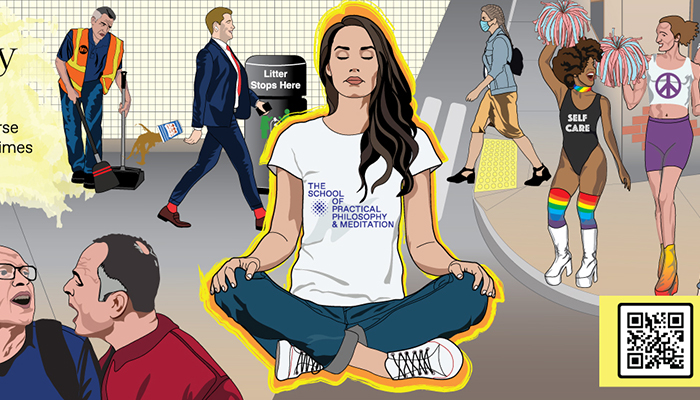
Philosophy Works Ad (2023-2024)
The School of Practical Philosophy and Meditation introductory course titled "Philosophy Works" has had declining registration over the last two years. I was given the task of creating a new advertising campaign that targets 20-40 year old New Yorkers to the 10-week course.
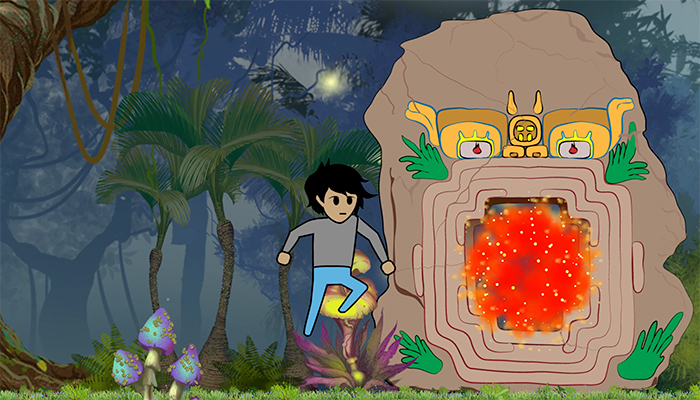
esfuerzo (in production)
esfuerzo is a multimedia installation inspired by Mayan culture and the arrival of over 152,000 unaccompanied minors to the Mexico/U.S. border in 2022. The installation presents a series of hand-crafted sculptures paired with an AR application; a one or two person 2D game that combines storytelling and platformer play. The installation reflects upon the politics of migration.
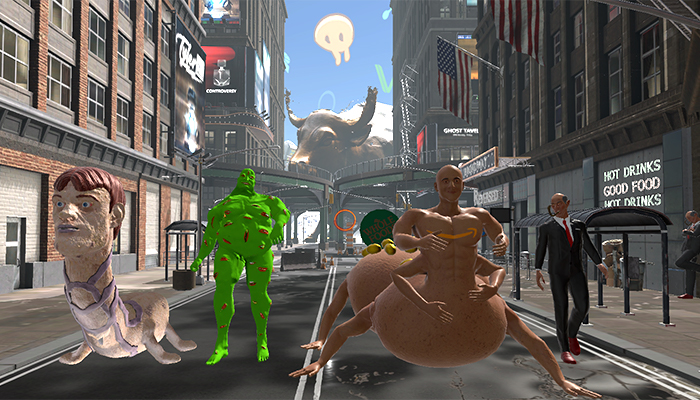
FinTech for the Precariat (2022)
It has been projected that the 2020s will be the decade of the FinTech Revolution, but who will this revolution ultimately serve? FinTech for the Precariat places one in Midtown Manhattan, wander to Wall Street or Chinatown. Encounter Lust, Gluttony, Greed and Envy as you listen to voices from across the financial spectrum.
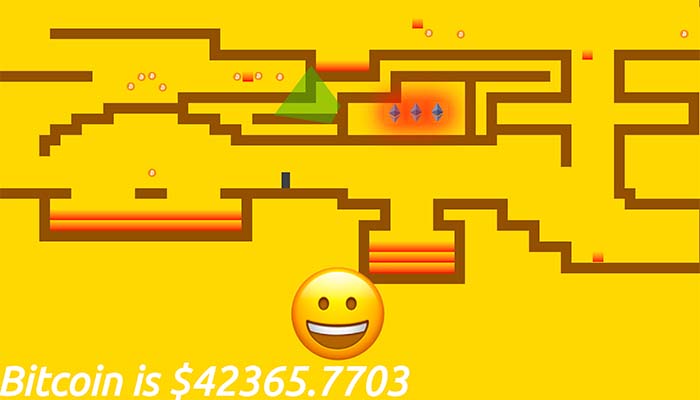
Chasing Bits (2022)
Chasing Bits is a JavaScript platformer and narration that reflects on this moment in time that is riddled with uncertainty and anxiety of what lays ahead. The JS platformer is adopted from Marijn Haverbeke's book Eloquent Javascript and re-contextualized to consider the popularization of altcoin speculation to get rich quick.
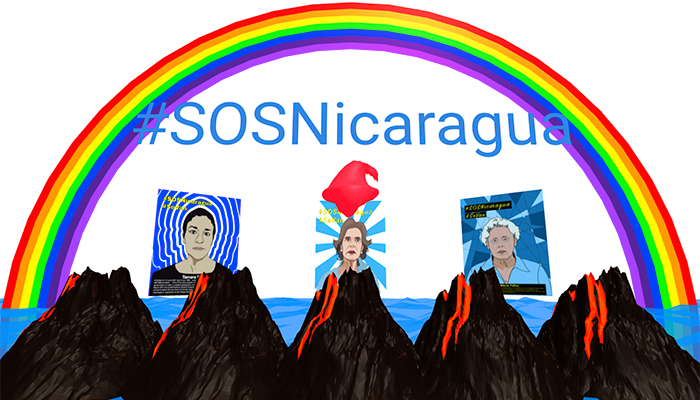
Nica DAO (2021)
Since 18 April 2018, hundreds of Nicaraguan citizens have been murdered by the government and hundreds have been imprisoned. 2021 is a national election year in Nicaragua, however, the Ortega-Murillo dictatorship have detained the opposition candidates. Inspired by the concepts underlying decentralized autonomous organization, Nica DAO speculates on a future Nicaragua
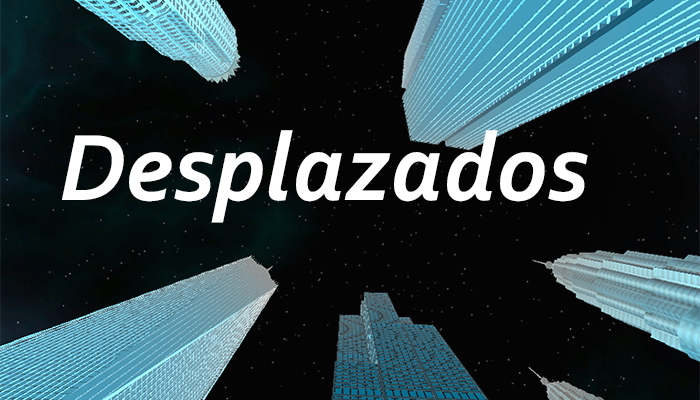
Desplazados (2020)
Desplazados is a wandering neighborhood application set amongst 19th century tenement buildings on cobblestone streets and inhabited by rats and pigeons. As the user explores the environment, they encounter disembodied voices sharing observations and tales regarding urban gentrification.
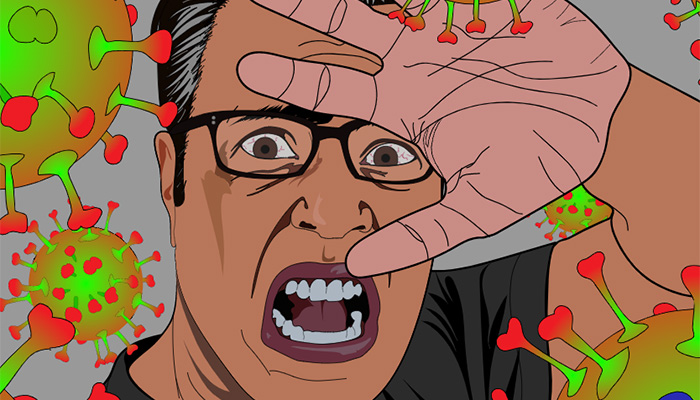
COVID Diary (2020-2022)
Things - art, writing - made during period of physical isolation as COVID-19 runs its course. Crowns are the hyperlinks to things made due to the stay at home order.
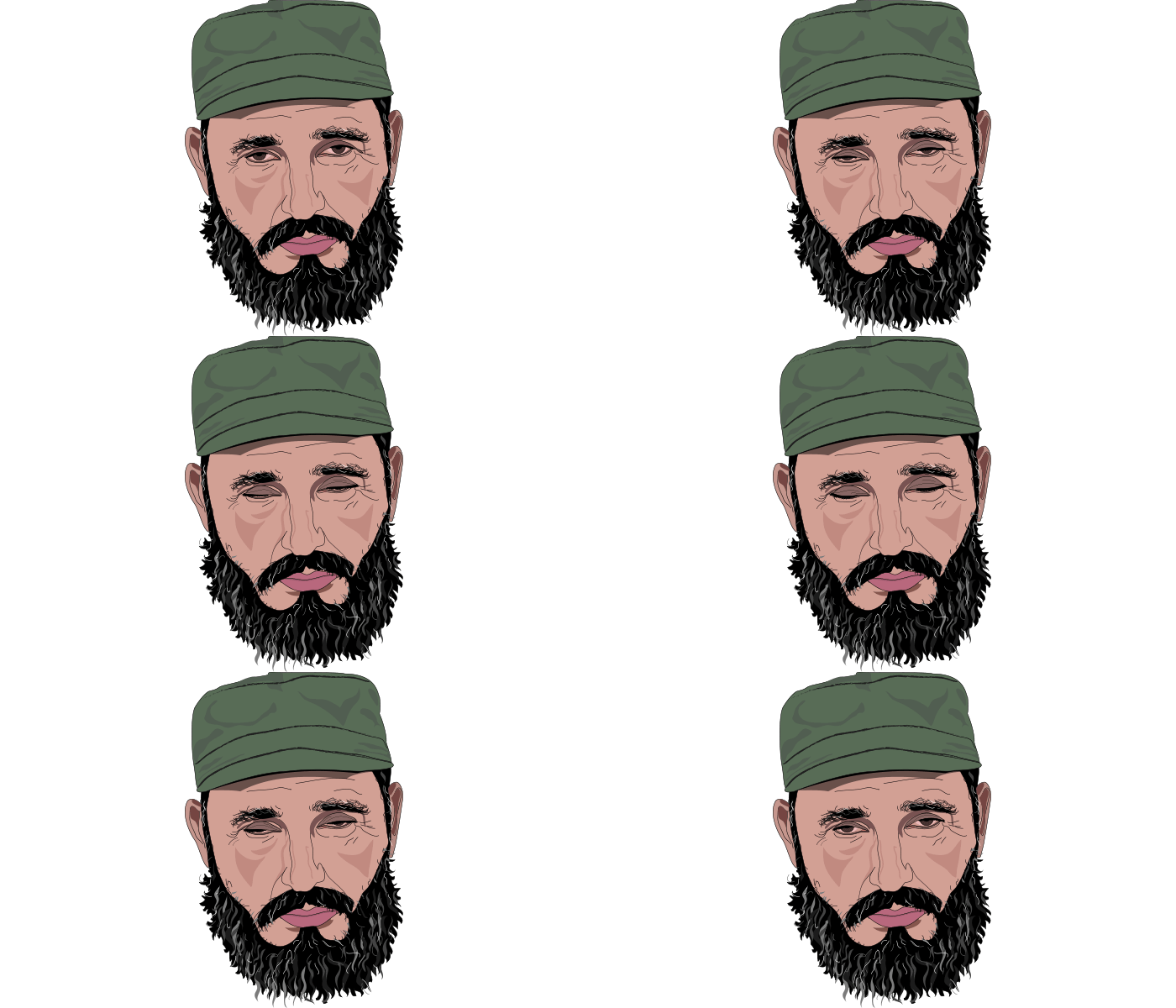
Dictator Cycle (2018)
Growing from a series of illustrations pairing past and current dictators to reflect a cycle of power, the project consists of illustrations, animation, and a memory game titled Amnesia. Amongst the illustrations are individuals who were once considered noble leaders but became corrupt autocrats unwilling to surrender power. Each Dictator Cycle pairing is either alive today or their reign continues to have very real consequences upon the country.
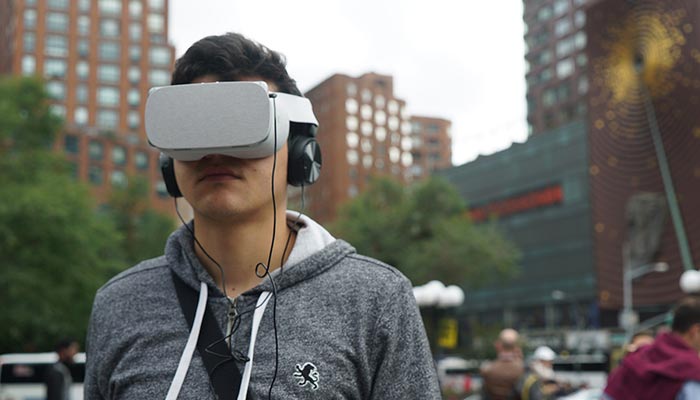
Realidad VE (2017)
Realidad VE is a virtual reality application that collapses documetary material with a virtual space. The Venezuelan musician José Bergher discusses the history leading to the current political and economic instability of Venezuela. The video interview with Bergher is juxtaposed against a virtual space populated by frantic citizenry.
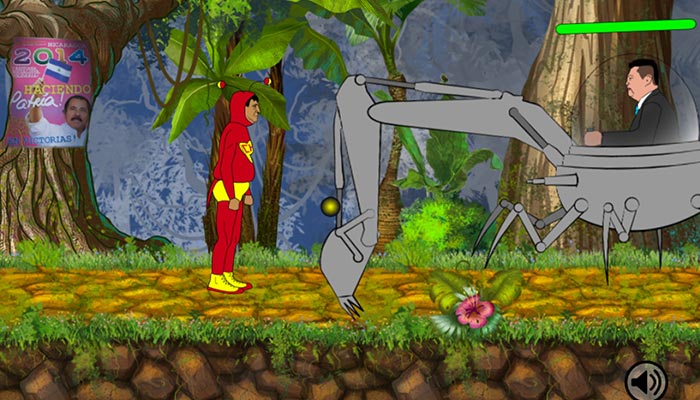
Ometepe (2016)
Ometepe is a video game that brings attention to the Nicaragua Canal project - a cross-oceanic canal that would entail the largest movement of earth in the planet's history and would leave immense ecological impact. Although the project appears to be stopped due to lack of funds, the Nicaraguan government remains secretive about the project.
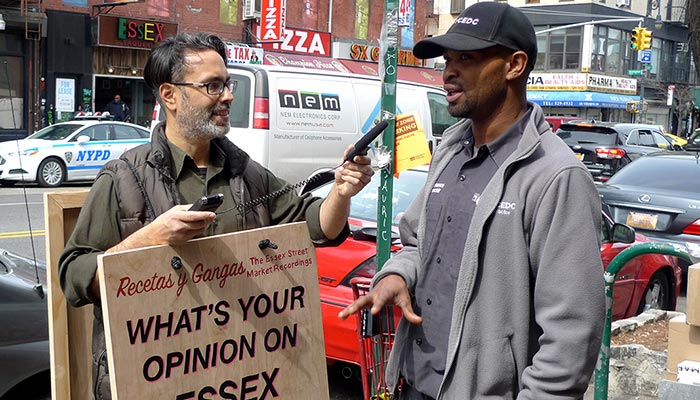
On Essex Crossing (in progress)
In the late 1960s, over 1,800 residents were displaced from the south side of Delancey for the development of affordable housing. Today, mixed-use and mix-income development - Essex Crossing is under construction, the community fought for affordable housing. Listen to resident opinions on Essex Crossing.
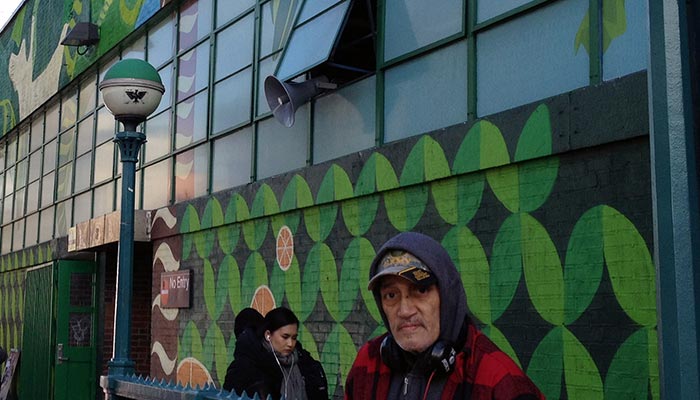
Recetas y Gangas (2016)
Commonly street markets around the world present an arcade to pedestrians allowing them to be at once inside and outside. The Essex Street Market does not have a sidewalk extension. Recetas y Gangas is an audio montage that seeks to extend the Essex Street Market on to the sidewalk through the voices of vendors and shoppers.
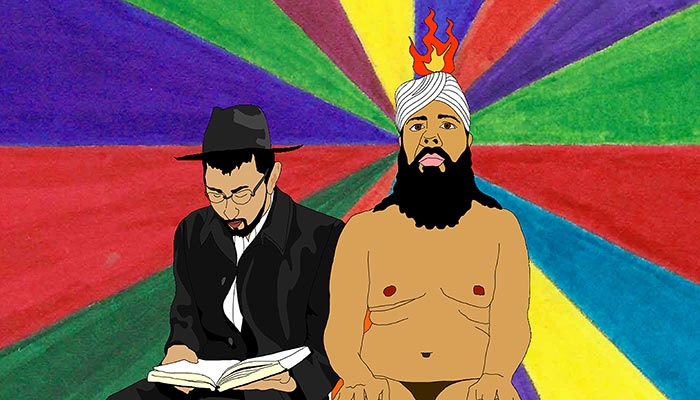
LOOPS (2014-2016)
Ongoing series of brief animated loops inspired by traversing the city. Whether walking or on public transit, observations of urban life trigger visual ideas that are rendered as brief animations. Audio accompanying the animations are recordings from urban walks. Go to LOOPS and click on the animations to see ongoing series.
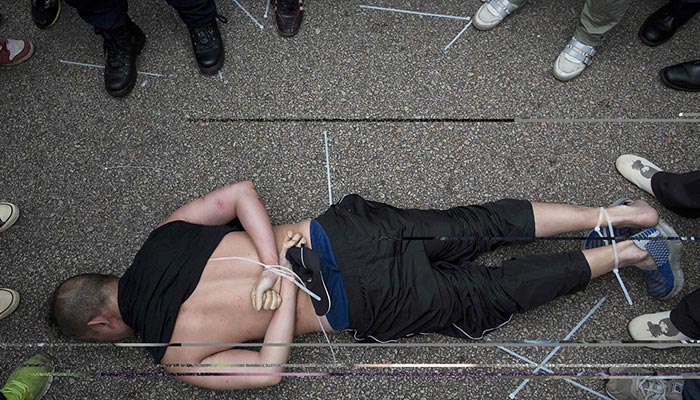
Hong Kong Glitch (2014)
img from the 2014 Umbrella Revolution in Hong Kong following the electoral reforms handing over the selection of Chief Executive to the Chinese government, are manipulated by scrambling the image data.
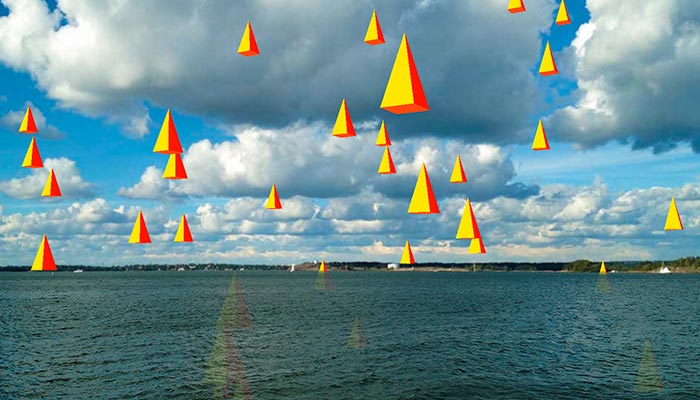
Helsinki Web Sketches (2013)
A series of graphic compositions assembled from img shot during an artist residency at HIAP—Helsinki International Artist Programme, Summer, 2013. The photographs are combined with WebGL code, animation, and video. The sketches utilize three.js and the Quintus game engine.
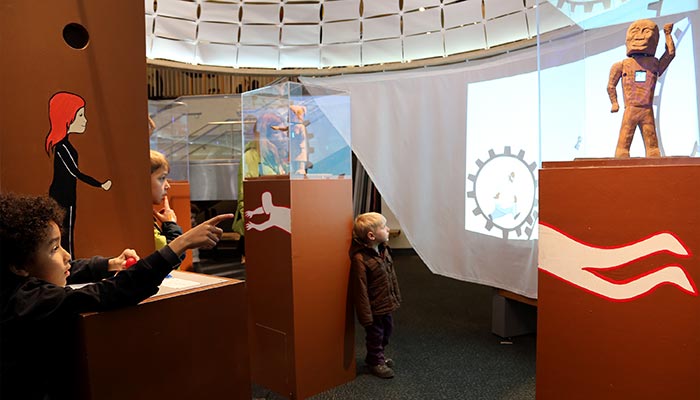
a geography of being : una geografia de ser (2012/2014)
An installation that reflects upon the dynamics of the undocumented immigrant youths in the United States. The installation consists of wooden kinetic sculptures with animated displays and a video game that places the player in the role of an undocumented youth that must face several challenges in the search for self-determination. The sculptures are networked to the game to help the player through the game.
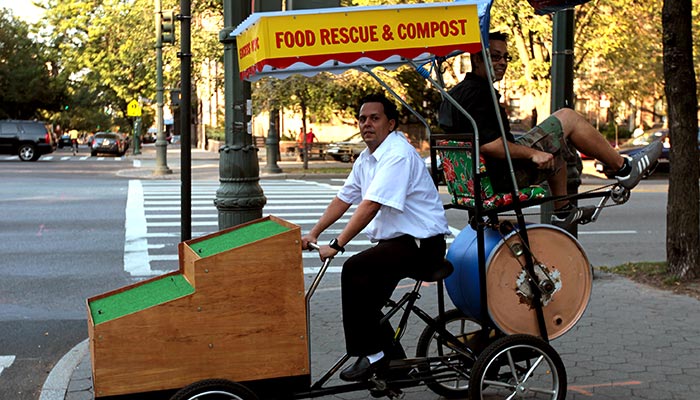
EXCESS NYC (2011-2014)
Excess investigates the large amounts of food going to waste in urban centers and creatively employs new tactics to divert food from landfill and back to people to consume or compost.
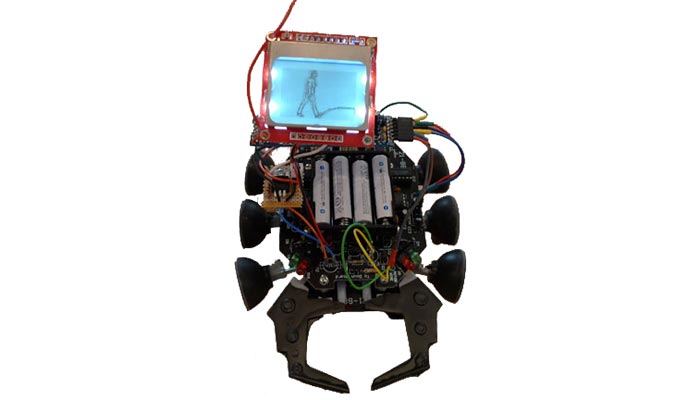
Undocumented Drones, version0.1 (2011)
A series of modified hobby robots that have been enhanced with an additional microcontroller, screen and radio module. Each robot presents a rotoscoped animation until it receives a twitter message with the tag "DREAMers". Upon receiving the tweet, the animation freezes, the motors are activated and the message or tweet is displayed. In 2012, they will be part of "Sanctuary City" at NY Hall of Sciences.
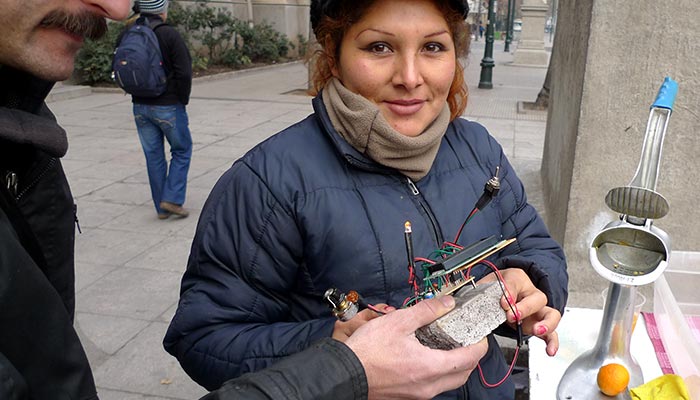
Miracle of Chile (2010)
A workshop, public situation, bus intervention and a virtual labyrinth that investigates Milton Friedman's famous phrase "Miracle of Chile". In 1981, Friedman declared the phrase in reference to Chile's economic change through his neolibral philosophy, in 2010 the triumphant phrase is questioned. Miracle of Chile is a collaboration with Kurt Olmstead. Commissioned by Ignacio Nieto for El Museo Nacional de Bellas Artes, Santiago, Chile.
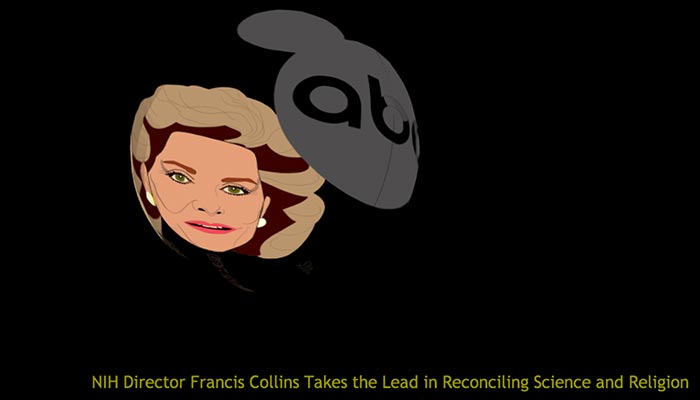
Breaking News (2009)
A two-part project: a news media literacy workshop designed for young children and an art installation that reflects upon the manner that current events seep into our lives. The installation is informed by the workshop and features the Breaking News application - an rss reader with a critical twist.
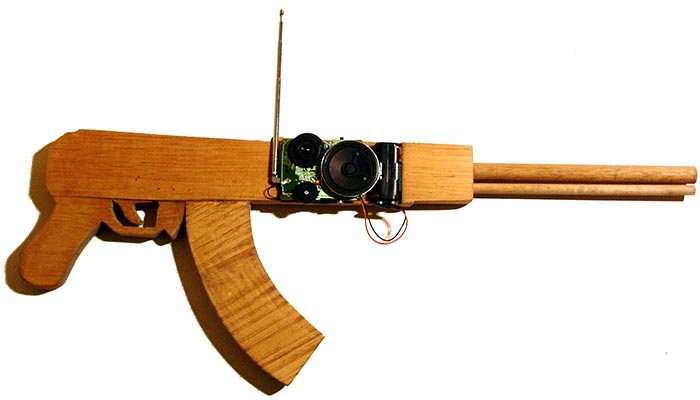
On Transmitting Ideology (ongoing)
In the form of street demonstration and gallery installation, On Transmitting Ideology, investigates how polarizing essentialist ideologies have been formed through mediated rhetoric. Hand-crafted wood AK47s and Uzis feature radio receivers that transmit an audio montage of famous historical speeches that have structured Conservative vs. Liberal ideologies. Listen to the audio montage online.
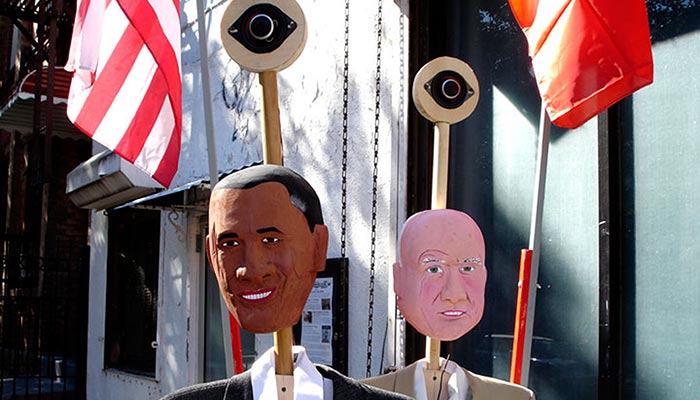
VOTEMOS.US Voting Cart (2008)
Through a street cart participants may take the voice of either McCain or Obama as they make public a hypothetical vote for the 2008 U.S. Presidential Elections. The cart features hand-crafted wooden busts of McCain and Obama. The Voting Cart presents participants a microphone that is amplified via speakers sprouting from the top of each candidate's bust.
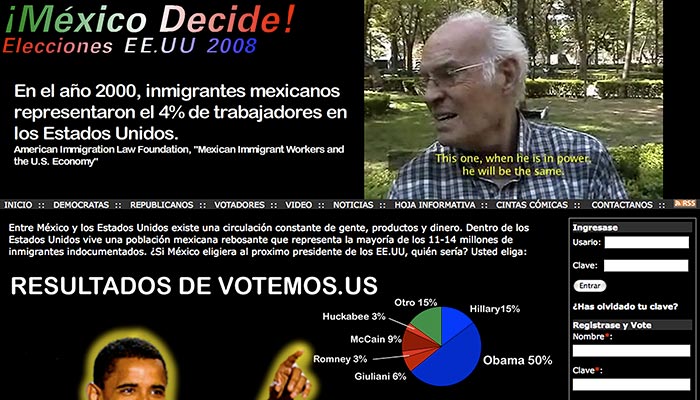
VOTEMOS.US ¡México Decide! (2007-08)
A Spanish language portal to the 2008 US presidential elections that proposes that Mexico get a vote in the US elections. Between Mexico and the United States exists a constant circulation of people, product and capital. Within the U.S. lives an active Mexican population that in 2000 represented 4% of the US labor force. If Mexico could elect the next U.S. president who would it be? Login and vote!
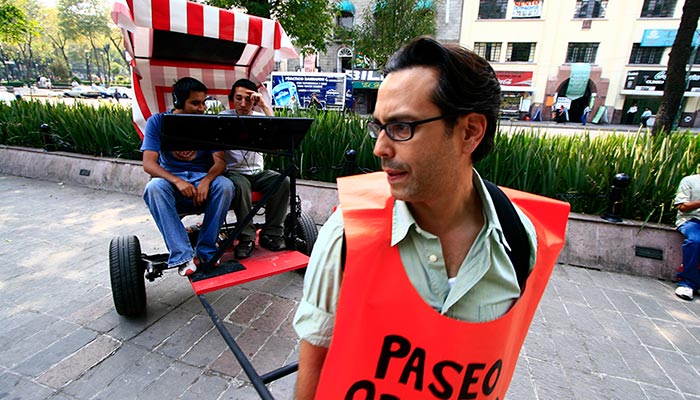
Carreta Nagua, Siglo 21 (2007)
In the colonial park, Alameda Central located in the historical center of Mexico City, I offer free rickshaw rides. Once the passengers settle into the rickshaw, they watch an animation that tells a tale of immigration, aging and cultural and familial loss. It is an animation based on the current reality of my parents. Carreta Nagua, Siglo 21 is commissioned for the festival TRANSITIO_MX02.
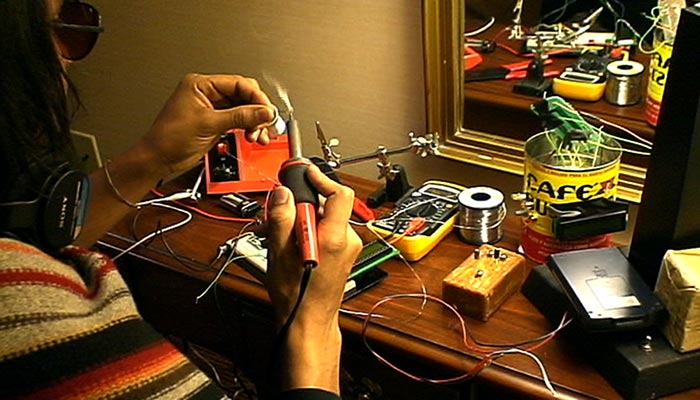
El Rito Apasionado (2007)
In a hotel room in Connecticut, three Guevarrian Neo-Marxist Latino Terror Revolutionaries seek to help establish a balance toward justice for the crimes committed by the United States of America toward small and poor nation states, cultures and peoples. the video El Ritual Apasionado is commissioned for the exhibition 50,000 Beds.
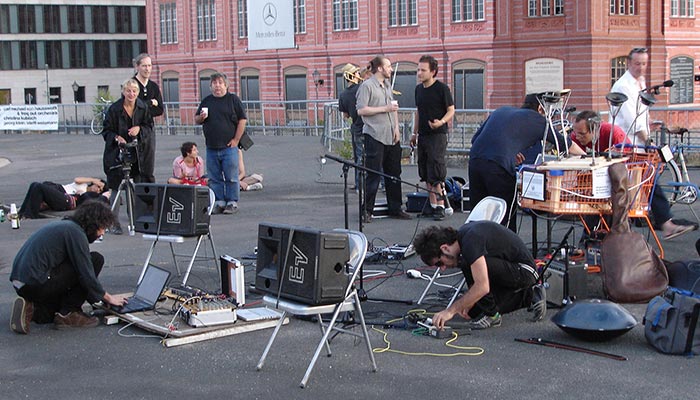
Copa Sonar (2006)
Public event at Schlossplatz, Berlin historically a highly politicized site. On July 14th it became site of public sound performance and broadcast. Organized by Marco Barotti, Emanuele Guidi and myself in collaboration with Sonambiente Sound Art Festival and Tesla Media Art Center, five experimental sound groups volunteered to overtake plaza. ap/xxxxx, B Component, the rottt, OLYVETTY, saal-c performed and broadcast via miniFM, visitors received free wine and beer.
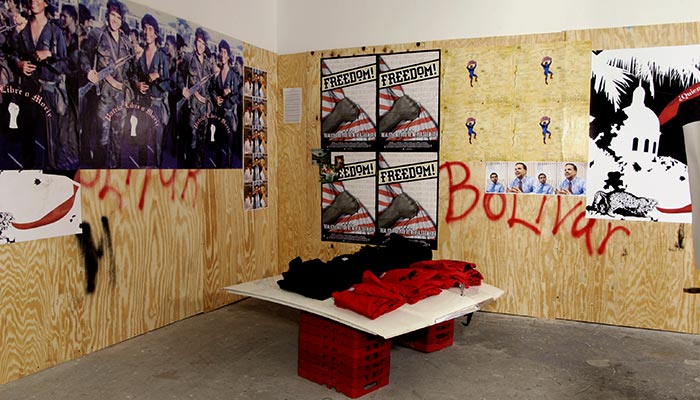
FALLOUT: What's Left (2005)
Drawing from public text submissions to an online repository of personal perspectives on Nicaragua, the installation Fallout at Momenta Art constructs a revisionist history portraying the ebb and flow of Latin American Marxist revolution. The installation features propaganda posters commissioned for the installation from four designers: Isabel Chang, Enrique Sacasa, Ed Adams and David Ulrich and much more.

Dentimundo (2005)
The best online resource to learn about Mexican border dentistry practice. Get a directory of dentists on the border, listen and download the hot new corrido - 'Corrido al Dentista' and most importantly gather tips on how to be a savvy medical tourist in Mexico. Commissioned for inSite05, Tijuana Calling, curated by Mark Tribe
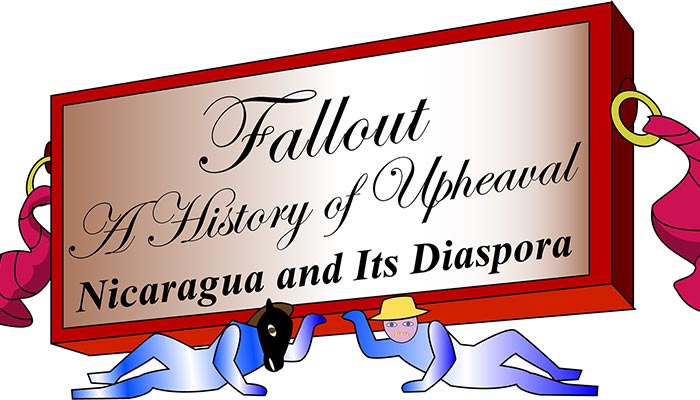
Fallout (2005)
Fallout serves as a repository of personal perspectives concerning the enigma of the Nicaraguan national character. Initiated by requesting personal commentary from individuals representing various generations of one family, Fallout is an open archive of informed and thoughtful insights addressing the past, present and future of Nicaragua. Commissioned by turbulence
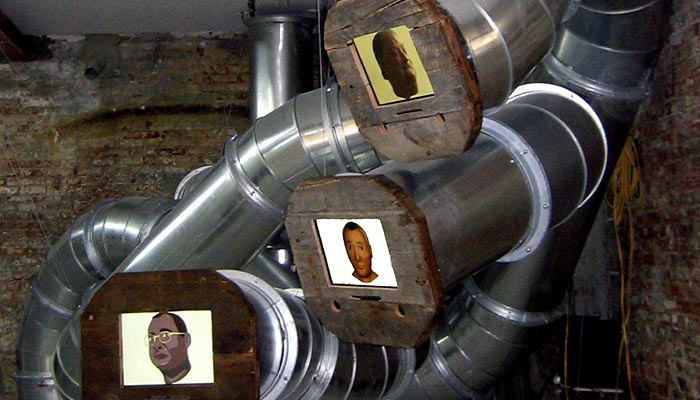
FROM DARKNESS TO DAYLIGHT (2004)
A video installation reflecting on the history and the future of the Bowery neighborhood. The sculptural work is made of a series of large ducts that have been interwoven together and inserted with monitors featuring computer animated characters that reflect different histories of the Bowery. Each animation is based upon a real resident of the Bowery and features recorded interviews by each with the artist. Commissioned by The New Museum
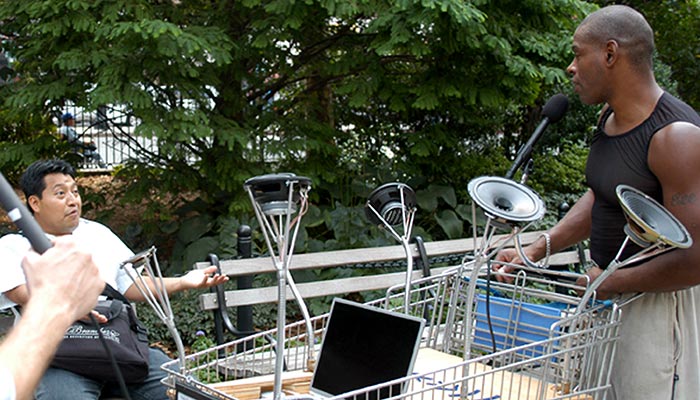
Public Broadcast Cart (2003)
A shopping cart is outfitted with a microphone, amplifier, speakers, miniFM transmitter, and a laptop with a wireless card. The shopping cart is designed to enable any pedestrian to become an active producer of a radio broadcast, broadcasting to the immediate area via FM frequency and to the thing.net's online radio station.

Nexum ATM (2003)
An interactive video sculpture in the form of an ATM that presents a history of aggressive intervention by the United States toward ten small, poor and globally dispersed countries. Accompanying the physical ATM is the NEXUM ATM website. The site is an informational depository to contest the actions of the Bush administration by presenting information and links toward civil mobilization.
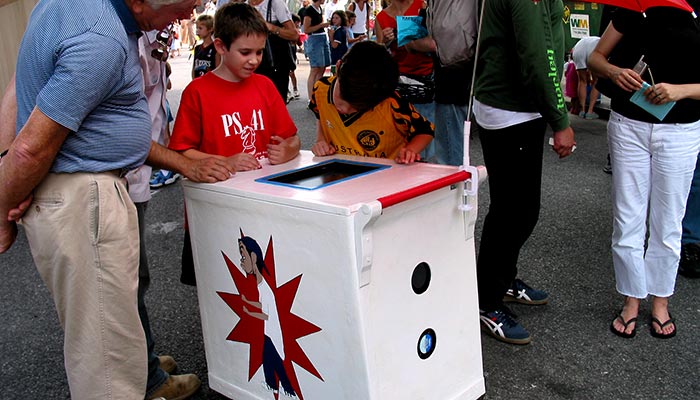
VAGAMUNDO: A Migrant's Tale (2002)
The online and mobile cart project for street display is composed of a video game that parallels the plight of undocumented immigrant labor in New York City. Users are invited to play through three levels of assimilation to beat the game and become a judge or helper to new immigrants.
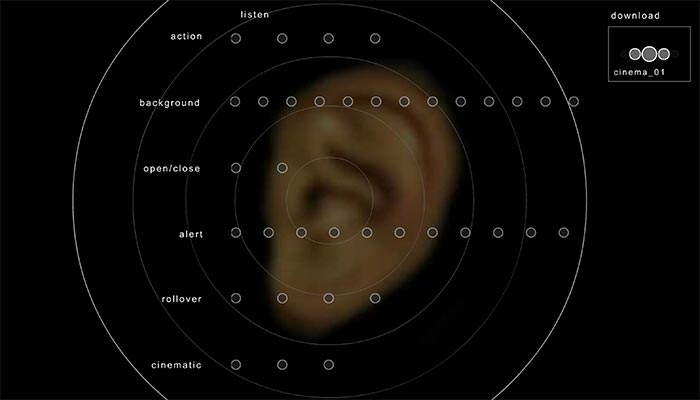
audiophile (2001)
A web app that presents remixes of the sounds of the city, from Managua, Nicaragua to Mexico City to Manhattan. The sounds made available for downloading represent an investigation of the urban landscape with layers of electronic composition.
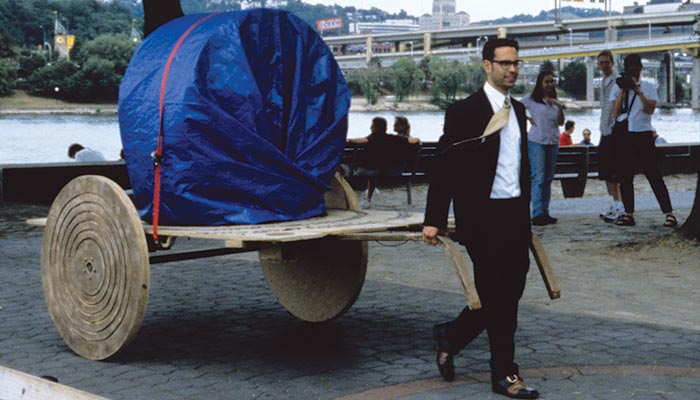
Cargo Load (1999)
A sculptural vehicle designed for public performance and display, calls to question the burden of modern technologies upon the individual.
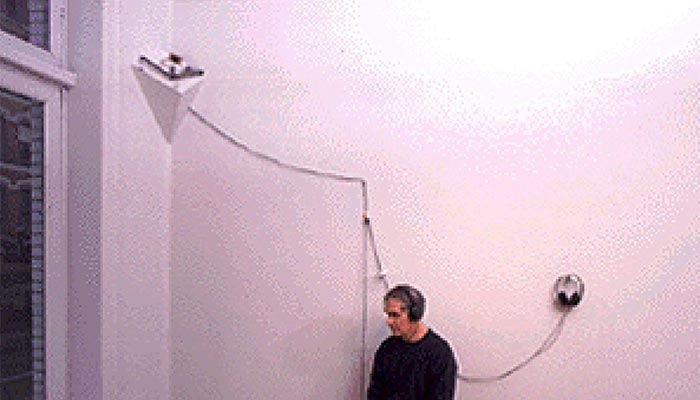
U.S. Authorities Say... (1999)
An audio montage composed of audio recordings from news accounts in 1999 during U.N. bombings in Yugoslavia and Iraq.
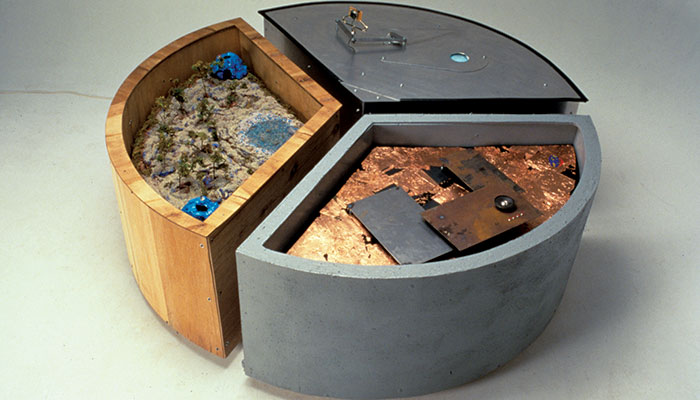
The Evolution of Utopia (1998)
The interactive sculpture illustrates utopian ideals from three periods in Western History
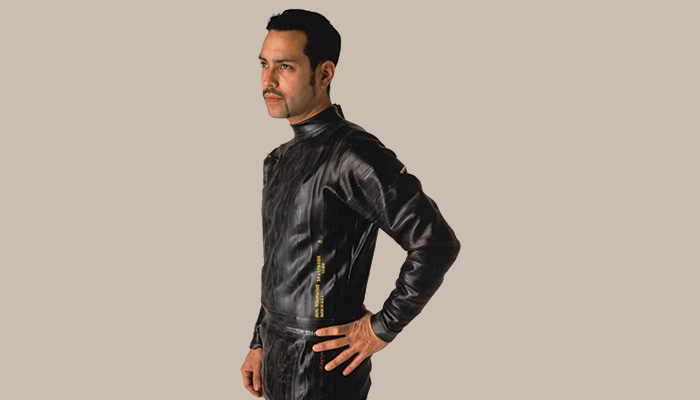
Human of the Future (1997-ongoing)
The Human of the Future: a black, chinese, mexican, jew consists of performances and artifacts. The Human of the Future is the product of global miscegenation in a post-nationalist age. The Human of the Future wears a suit constructed from bicycle inner tubes and sculptural elements such as his coyunda, ritual figures and codices.